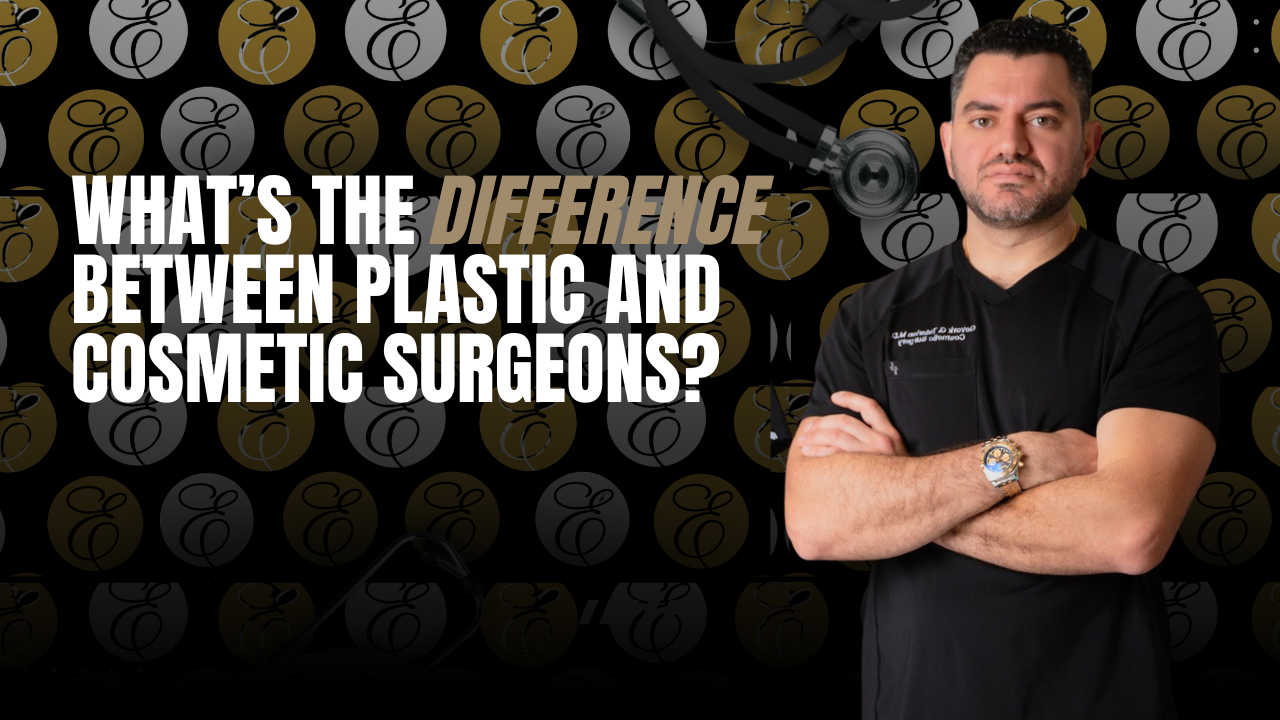
Plastic surgeons train mostly in reconstructive surgery and add cosmetic work later. Cosmetic surgeons train almost entirely in cosmetic procedures from the start.
Both can legally perform aesthetic surgery. The real difference is *what they practice most*. This guide explains the training paths, what to ask, and how to pick the right surgeon for you.
How the two paths differ
A plastic surgeon completes a six-year plastic surgery residency. Most of those years focus on reconstructive cases. Aesthetic cases make up a smaller share. Some plastic surgeons add an aesthetic fellowship after residency.
A cosmetic surgeon first completes a surgical residency, often in general surgery. They then finish a one-year fellowship in cosmetic surgery. The fellowship is accredited by the American Academy of Cosmetic Surgery, the national group that sets cosmetic-surgery training standards (AACS).
Dr. Tatarian followed this path. He spent five years in an ACGME-accredited residency program (the national medical training board), rotating through trauma, general, oncology, pediatric, burn, and plastic surgery. He then completed a one-year AACS fellowship focused only on cosmetic procedures.
Both paths are accredited. The labels just describe where the focus sits.
Side-by-side comparison
| Plastic Surgeon | Cosmetic Surgeon |
|---|---|
| Residency: 6-year plastic surgery residency (integrated or independent) | Residency: Surgical residency in another specialty (often general surgery, ENT, OB-GYN, or dermatology) |
| Fellowship: Optional aesthetic fellowship | Fellowship: 1-year AACS fellowship focused only on cosmetic surgery |
| Primary board: American Board of Plastic Surgery (ABPS) | Primary board: American Board of Cosmetic Surgery (ABCS) |
| Daily focus: Reconstructive and cosmetic cases mixed | Daily focus: Cosmetic cases only |
| Procedures: Reconstructive (cleft palate, post-cancer, burn) plus cosmetic | Procedures: Aesthetic only |
| Practice setting: Hospitals and outpatient centers | Practice setting: Outpatient surgical centers, often single-specialty |
| Hospital privileges: Broadly recognized | Hospital privileges: Vary by hospital and state |
The two titles are not interchangeable. They describe different boards, different training pipelines, and often different daily caseloads.
Training in numbers
ABCS certification requires a minimum of 300 cosmetic surgeries in one year, including:
- 50+ breast surgeries (augmentations, lifts, reductions) - 50+ body contouring surgeries (tummy tucks, liposuction, body lifts) - 50+ facial cosmetic surgeries (facelift, rhinoplasty, eyelid surgery) - 50+ skin-related procedures (laser, resurfacing)
By comparison, the plastic surgery residency requires 150 cosmetic cases across six years. So a cosmetic fellow performs roughly *double the aesthetic cases in one-sixth the time*.
Dr. Tatarian stopped logging cases at 1,200 during training.
Volume matters because cosmetic surgery is a high-repetition craft. The more often a surgeon performs your specific procedure, the more predictable the result. High-volume centers also tend to report lower revision rates than generalist practices.
What to ask your surgeon
You'll want to ask two specific numbers at consultation:
- How many of *this exact procedure* do you perform per year?
- What are your complication and revision rates over the last 24 months?
A confident surgeon will share both.
Use this short checklist when you vet any surgeon:
- Verify board certification — ABCS or ABPS.
- Ask about case volume for *your* procedure.
- Ask to see consecutive (not curated) before-and-after photos of patients with anatomy like yours.
- Confirm the surgical facility is accredited and has on-site emergency equipment.
A surgeon who clears all four is a strong candidate, regardless of board.
Common misconceptions
"Only plastic surgeons can do cosmetic procedures."
False. Both specialties can legally perform cosmetic surgery if the surgeon is board-certified for that procedure. Scope of practice is set by training and privileges, not by the title on a business card.
"Plastic and cosmetic surgery are the same."
Not quite. All cosmetic surgery is aesthetic. Plastic surgery also covers reconstructive work — burns, trauma, cleft repair, and post-cancer reconstruction.
"All board certifications are equal."
Not always. The two main boards are the ABPS and the ABCS. Both require rigorous testing. What matters is that your surgeon is certified in the specific procedure you want.
"Always pick a plastic surgeon for cosmetic work."
Not always. Plastic surgeons split attention between reconstructive and cosmetic cases. Cosmetic surgeons focus only on aesthetics. Procedure volume often matters more than title.
Why aesthetic style still matters
Two equally trained surgeons can produce very different results. Their *aesthetic eye* differs. One may favor a flatter, athletic abdomen. Another may prefer softer, more feminine contours.
Reviewing recent before-and-after work is the best way to confirm a surgeon's style matches what you actually want.
Choosing the right surgeon
The most important factors when you choose a surgeon are:
- Board certification in your specific procedure - High annual volume of that procedure - An accredited surgical facility - Clear pre- and post-operative protocols
Ask for written informed-consent documents. Ask who manages your recovery. Ask how revisions are handled — *before* you sign anything.
At Elevé Cosmetic Surgery, Dr. Gevork Tatarian is a double board-certified cosmetic surgeon who focuses his practice entirely on cosmetic procedures.
Learn more about choosing an ABCS-certified surgeon →
Frequently asked questions
Is a cosmetic surgeon a real doctor?
Yes. Cosmetic surgeons are licensed medical doctors who completed a surgical residency plus a cosmetic surgery fellowship.
Which board is better, ABCS or ABPS?
Neither is "better." They certify different training paths. What matters is that your surgeon is certified for the specific procedure you want.
Can a plastic surgeon do everything a cosmetic surgeon can?
Yes, legally. The practical difference is focus — plastic surgeons split time with reconstructive cases, while cosmetic surgeons work only on aesthetics.
How many cases should my surgeon have done?
For elective cosmetic procedures, look for surgeons who perform your specific procedure dozens of times a year. Ask for the exact number.
What questions should I ask at my consultation?
Ask about board certification, annual volume of your procedure, complication and revision rates, facility accreditation, and the anesthesia team.
Does training pathway predict outcome?
Not by itself. Training depth, current case volume, and facility safety standards predict outcomes far more than title alone.
Sources & References
Ready to Take the Next Step?
Schedule a personalized consultation with our specialty-trained cosmetic surgeons.